
Yarded — Digitizing Military Logistics
Yarded was a digital logistics solution developed to support the German Bundeswehr’s marshaling operations. The project explored how a decades-old, paper-based coordination system could be modernized to better handle real-time changes and complex logistics workflows. Through field research, operational journey mapping, and collaborative workshops with soldiers and engineers, the project identified opportunities to improve communication, coordination, and automation within the staging process. The resulting concept later won the 2023 NATO Innovation Challenge.
Role: Strategic Deigner / Lead Researcher
Duration: 10 weeks
Outcome: Winner of the 2023 NATO Innovation Challenge for Military Logistics and Transport. There are now plans to implement Yarded european-wide for a many NATO nations.
Details
Challenge:
The Bundeswehr’s logistics unit LogBtl 163 RSOM managed complex marshaling operations using a decades-old pen-and-paper system supplemented by improvised Excel spreadsheets. This made it difficult to coordinate updates, adapt to changing conditions in the field, and maintain real-time visibility of equipment and shipments. The challenge was to explore how a digital system could support (not replace) these operations without disrupting the realities of field work.
Core questions to be answered:
Where are the biggest inefficiencies in the current marshaling process? and why?
How can the Visitrans platform be adapted to support the needs of military logistics operations?
Responsibilities:
Led discovery research and operational workflow mapping
Facilitated workshops with soldiers, designers, and engineers
Translated operational insights into product opportunities
Guided the early strategy for adapting the Visitrans platform
Timeline
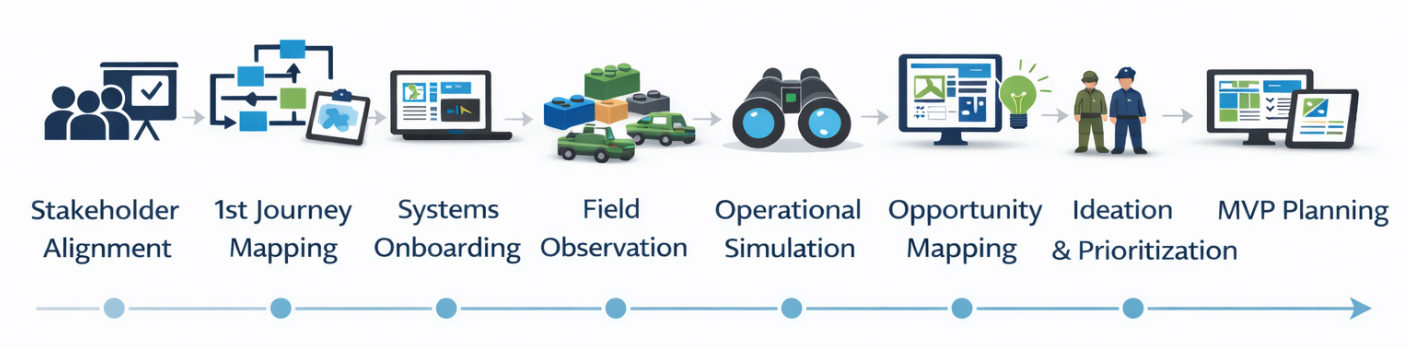
Week 1 – Stakeholder Alignment
Aligned with stakeholders on research goals, operational context, and project scope.
Week 2 – Initial Journey Mapping
Created the first draft of the operational journey in Miro based on discussions with logistics personnel.
Week 3 – Systems Onboarding
Conducted a deep dive into the existing tools and infrastructure used by the unit.
Week 4–5 – Field Observation
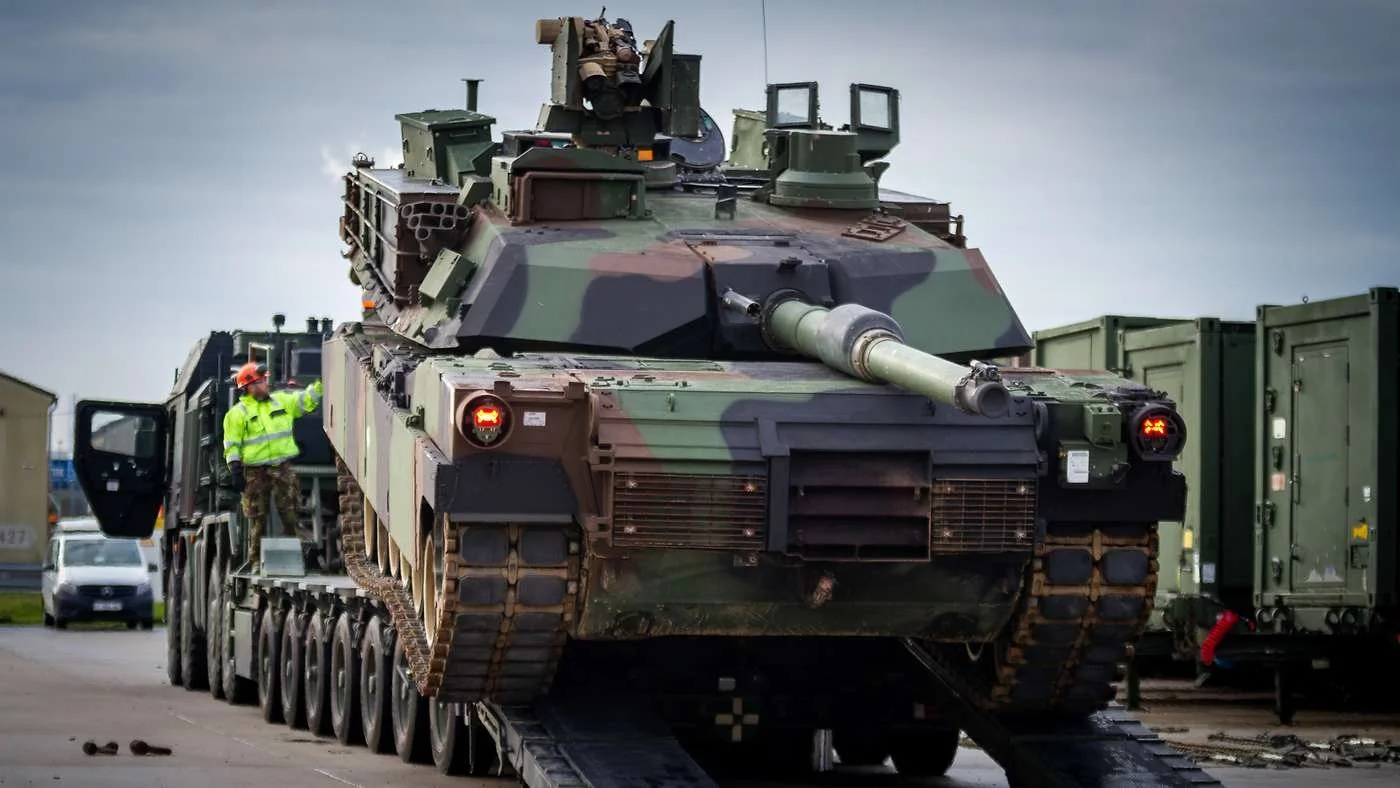
Traveled on-site to shadow a live RSOM operation, observing how staging operations unfolded in real conditions.
Deep dive into research approach
© Bundeswehr/Roland Alpers
Due to the complexity of the system we were observing, we created an iterative journey map. Each new iteration utilized different methodologies to maximize the benefits of varied perspectives.
1st Journey Map — Initial Understanding
Captured a high-level overview of the operation based on early interviews to identify the main stages and roles involved.
2nd Journey Map — Structured Workflow
Refined the journey to clarify task sequences and dependencies between different roles in the process.
3rd Journey Map — Operational Reality
Updated the journey map using insights from field observation to reflect how the operation actually unfolds in real conditions.
4th Journey Map — Detailed System View
Combined all research insights into a detailed system map used to identify bottlenecks and opportunities for improvement.
Impact and Outcome
Research Methods
• Field observation of live logistics operations
• Operational walkthrough interviews
• Iterative journey mapping
• Physical simulations map dependencies between roles
Week 6 – Operational Simulation
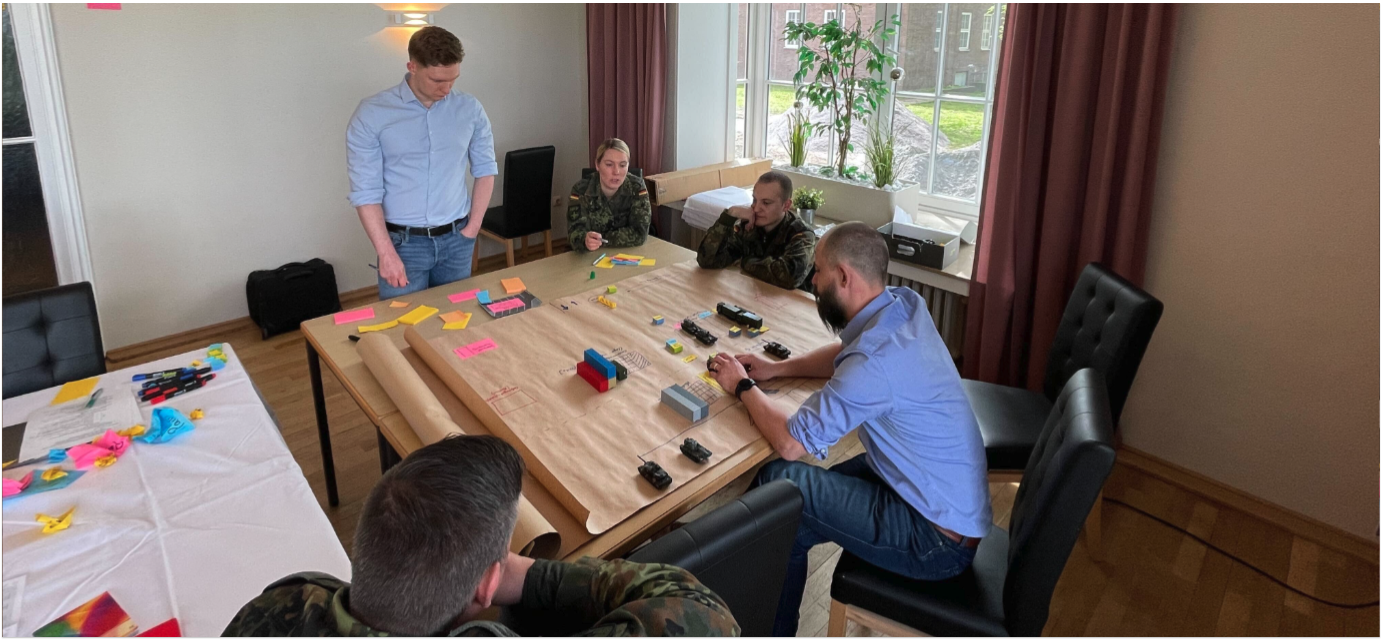
Recreated the marshaling operation using Legos and toy vehicles, allowing the team to cross-check and refine earlier journey maps.
Week 7 – Opportunity Mapping
Mapped the capabilities of the Visitrans platform against the operational journey to identify areas with the highest improvement potential.
Week 8–9 – Ideation & Feature Prioritization
Facilitated workshops to generate and prioritize solution ideas using impact vs effort frameworks.
Week 10 – MVP Planning
Developed early MVP concepts and simulations to test ideas before committing to full development.
Beyond the basic, essential questions about processes, interviews and observations focused on capturing each participant’s perspective of the entire operation. Because the RSOM process has many interconnected roles, understanding how each soldier perceived the system was critical.
Example prompts included:
“From your perspective, what factors made the most successful operations until now a success?”
“Which parts of the process depend on other teams, and where do those handoffs sometimes break down?”
“When unexpected changes happen in the field, how does that information currently travel through the team?”
This approach helped reveal discrepancies between roles and identify structural inefficiencies within the workflow.
The research conducted during the discovery phase became the foundation for the overall product strategy. Through a detailed understanding of the operational workflows, the team was able to identify which existing capabilities of the Visitrans platform could be reused, define new features required to support military logistics operations, and explore opportunities for introducing automation into the marshaling process. The impact of the solution was evaluated using two key operational indicators: operation execution time and item traceability, though the exact metrics remain confidential due to security restrictions. The project later received international recognition, winning the 2023 NATO Innovation Challenge for Military Logistics and Transport, validating the real-world applicability of the solution. Beyond the technical outcomes, one of the most meaningful impacts was the shared understanding created among the soldiers involved in the project, as the research process helped different roles gain new insight into how the broader operation functioned.