
Building an internal innovation hub for sustainable mobility
The project focused on helping a major player in the German sustainable mobility sector build an internal innovation hub to expand its portfolio of products and services. By introducing structured processes for ideation, research, experimentation, and validation, the initiative enabled employees to develop and test new ideas while building the organization’s internal innovation capabilities.
Role: Strategic Designer / User Researcher
Duration: 1.5 years
Outcome: Through use of the framework, employees submitted 80–100 innovation concepts, including a product that later won the 2024 EUROBIKE Award for Best Digital Solution.
Details
Challenge:
The organization wanted to expand its portfolio of sustainable mobility solutions by encouraging employees to propose new products and services. However, while many ideas existed within the company, there was no structured process, infrastructure, or shared methodology to develop those ideas into validated opportunities. Employees lacked the tools and experience needed to move from early concepts to research, experimentation, and business validation, making innovation efforts inconsistent and difficult to scale across the organization.
Core questions to be answered:
How can we create a structured framework that enables employees to move ideas from concept to validated opportunity?
What support systems are needed to help teams experiment, learn, and iterate effectively?
Which internal assets and resources can be leveraged to support idea validation?
Responsibilities:
Oversaw the creation and implementation of design playbooks and frameworks documenting research, experimentation, and innovation/validation methods
Facilitated workshops including mission and vision alignment, ideation sessions, idea scoring, prioritization, and retrospectives
Led a 4-week Agile Design bootcamp and other individual trainings in research, strategy, and agile product development
Mentored internal teams as they developed their first ideas through discovery, research, and early prototyping
Research Methods:
Stakeholder interviews
Organizational capability assessment
Workshop facilitation
Process mapping
Opportunity mapping/Scoring
Collaborative ideation sessions
Innovation Process / Idea Funnel

1. Idea Submission
Employees submitted new product or service ideas through a structured process that helped them frame opportunities and articulate potential value.
2. Idea Evaluation
Ideas were scored using criteria focused on desirability, feasibility, viability, and strategic alignment, allowing the most promising opportunities to move forward.
3. Discovery
Teams explored the problem space to understand the opportunity and develop key hypotheses about potential solutions.
4. Research
Research and analysis were conducted to identify customer needs, evaluate existing solutions, and uncover gaps.
5. Concept Development
Insights from research informed ideation sessions where teams generated and refined solution concepts.
6. Validation
Concepts were tested with users and experts while also evaluating market potential, business viability, and strategic fit.
7. Investment & Build
Validated ideas were presented to internal stakeholders for investment approval before moving into development and scaling.
Deep dive
Framework Development
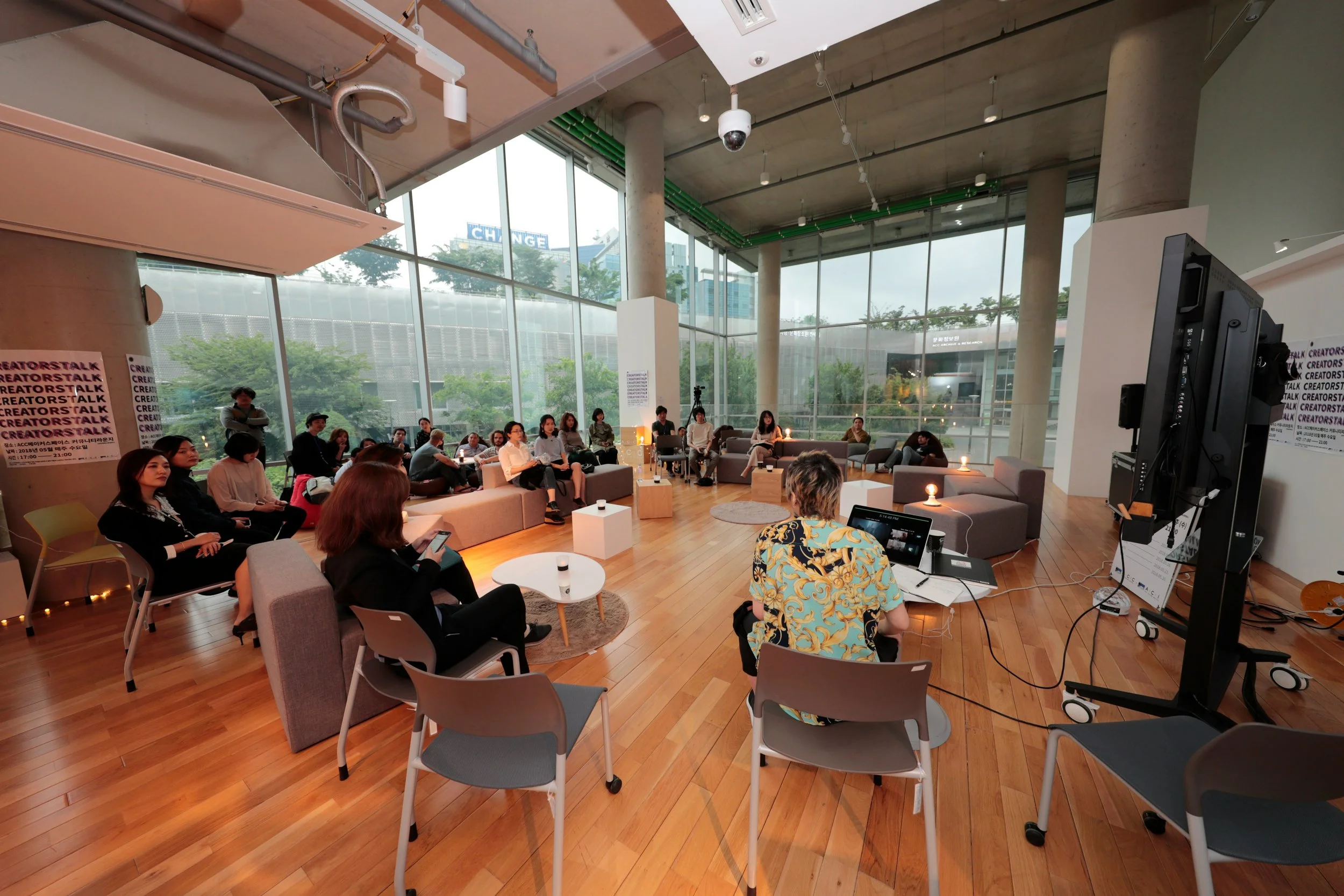
To start, we first assessed the organization’s existing capabilities, processes, and resources related to innovation. Through stakeholder interviews, workshops, and collaborative mapping sessions, we identified gaps in how ideas were generated, developed, and validated.
This discovery phase helped us define the core structure of the innovation framework, ensuring it aligned with both the organization’s strategic goals and the capabilities of its employees.
Key activities included:
Development of mission/vision statments
Stakeholder interviews and capability assessment
Identifying gaps in skills, tools, and infrastructure
Defining the core stages of the innovation pipeline
Defining ‘sucess’ criteria for each stage of the framework
Incorperation of a continous resarch framework
Photo by ASIA CULTURECENTER on Unsplash
Training & Tools
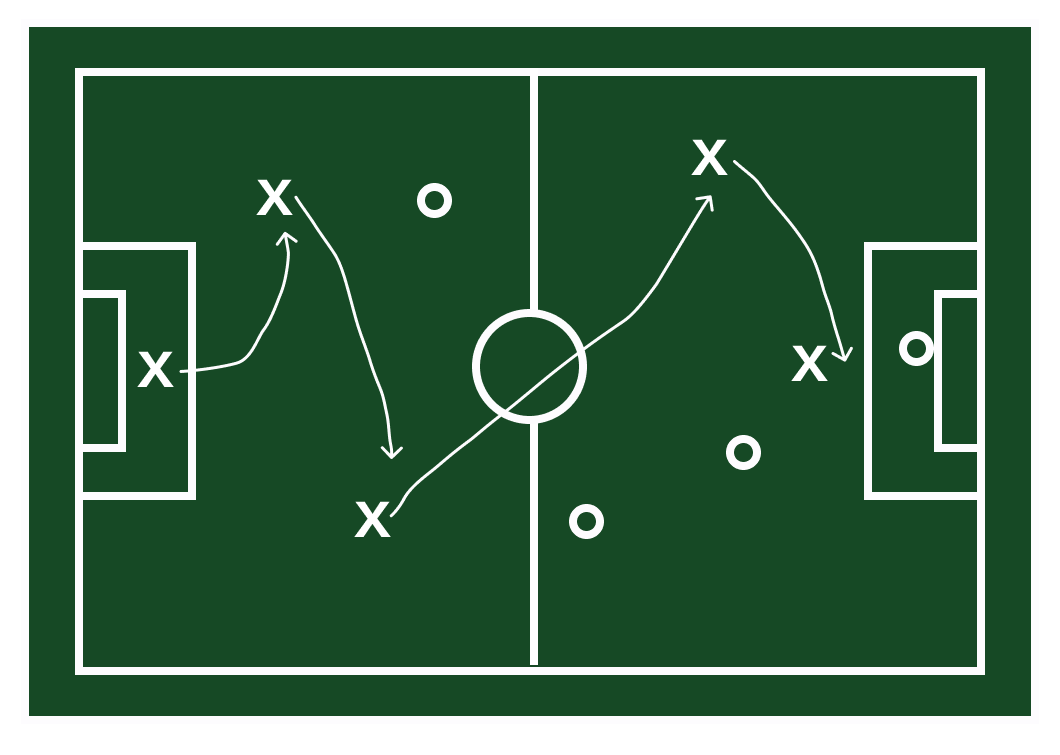
To support the innovation process, we developed an ‘upskilling’ program which included training and toolsthat helped employees and teams move ideas from early concepts to validated opportunities.
Various tools and methods to evaluate ideas (i.e. ICE framework)
Workshop formats for ideation and prioritization
Templates for research and validation experiments
Playbooks documenting innovation methods and workflows
Training sessions to accompany each tools and stage of the framework
Mentoring sessions to provide direct guidance and feedback
Aiding and assisting in the hiring of team members of the innovation hub and for concepts which secured funding
Impact and Outcome
The innovation hub established a structured and repeatable framework that enabled employees to move ideas from early concepts to validated opportunities. By introducing clear processes for discovery, research, experimentation, and validation, the organization gained the internal capability to systematically explore and develop new products and services.
During my time on the project, employees submitted approximately 80–100 new ideas, creating a sustainable pipeline of potential innovation projects. Teams were able to test and refine concepts using research and experimentation before requesting further investment from leadership.
One of the most successful ideas to emerge from the program was a digital service concept that went on to win the 2024 EUROBIKE Award for Best Digital Solution, demonstrating the real-world impact and scalability of the innovation framework.
Beyond individual products, the project helped foster a culture of experimentation and learning within the organization. Employees gained the confidence and tools needed to explore new ideas using a learn fast, fail fast mindset, allowing the company to innovate more effectively in the long term.